
 TripSit is pleased to announce the release of its new website, with a new branding and design. Hopefully this makes the user experience superior and our content easier to access and read. Using this platform we hope to continue providing quality content about drug and harm-reduction related issues.
All of our previous posts have been imported into the new website and will remain accessible, even preserving the URLs they had previously, so external links will not be broken.
We are happy to hear feedback about any aspect of our services, be it the content or design. If you have any suggestions, feedback or ideas, then feel free to leave a comment on one of our posts, use the Contact page or send an email to feedback [AT] tripsit.me .


 Dextromethorphan (DXM) is a dissociative and hallucinogenic drug which is commonly found in cough medicine; its widespread reputation among popular culture and in some sections of drug culture is that it is a drug of convenience, used only by teenagers without access to illicit drugs, taking advantage of their ability to purchase it over the counter in a pharmacy or order it online. However, among some sects, DXM is respected as a powerful and complex psychedelic which can produce experiences wholly different yet similar in worth and intensity as the more traditional hallucinogens.


 Professional and recreational drug users alike utilise a number of different routes of administration when ingesting their drugs, which allows them to affect certain variables of a drug’s resulting experience: things like the bioavailability (how much of a drug will be absorbed), onset, duration and dose required. This is often a trade-off, as different ROAs come with different advantages and disadvantages; 2c-b for example has quite an unpredictable onset time taken orally, while nasally the onset is very predictable at the cost of being legendarily painful.


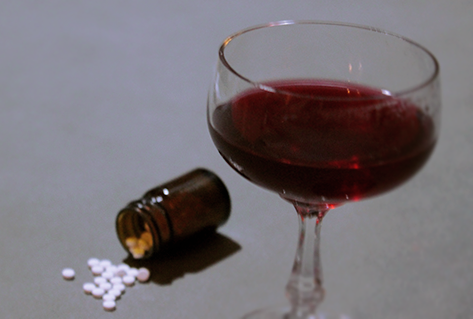 Depressants (including alcohol, opioids, benzodiazepines, dissociatives and others) are the most widely used class of recreational drug in the world. Yet, despite and perhaps due to their relative ubiquity, their dangers are often not well known and respected by users. As a result of this, depressants and combinations of depressants are the most common cause of drug-related deaths.[1][2][4][6] Here we discuss the dangers of depressant use, and explain why they are heavily compounded when used in combination with each other, and thus why such mixes should almost always be avoided.


 The media has recently reported the invention of a

